


Fables of Shwedagon
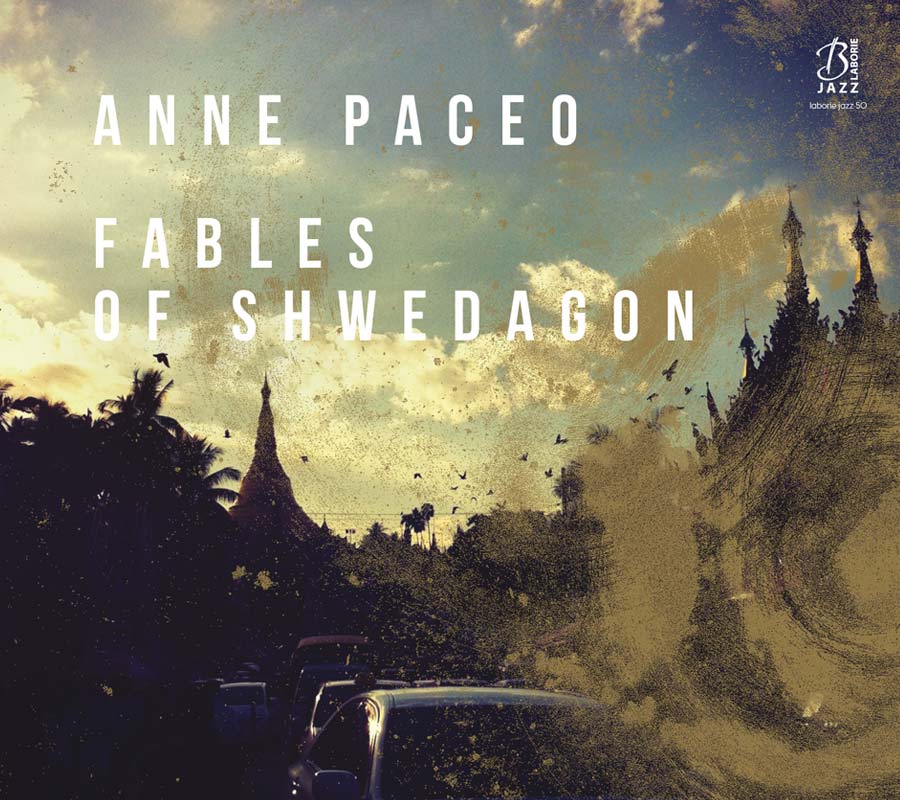
- Artist: Anne Paceo
- Ref.: LJ50
-
Release : april 20, 2018
-
 DOWNLOAD ALBUM
-
 BUY DISC
After almost 60 years of dictatorship, Myanmar (formerly Burma) has been in upheaval since the first democratic elections in 2010 and the lifting of embargoes. For a Burmese, it was almost impossible, until 2010, to leave the country, and foreign influences were perceived as a danger by the military junta. As a result, Burmese music and culture have been little exposed to foreign influences. The result is music that is unique in the world, whose singularity has been preserved for decades.
The first traces of the traditional Burmese orchestra called Hsaing Waing date back to the 17th century and its composition has not changed until today. Originally, the Hsaing Waing orchestra was played at the court of kings and during dance and puppet performances.
It consists of 5 main instruments: the Hsaing Waing (21 tuned drums placed in a circular manner, played with the hands), the Maung Hzaing (36 small gongs placed horizontally and vertically, played with mallets), the Chauk Lone Pat (2 large drums and 5 small ones, tuned and played with the hands), the Hne (a kind of traditional oboe) and the Si Wa (bell and woodblock). The player Hsaing Waing leads the group, he plays the main melody, gives the starts, changes the tempos, and he is also the most respected musician in the hierarchy of the group. The Maung Zaing plays the ornamentations on the melody. Le Hne plays the melodies and improvises. The Chauk Lone Pat plays the rhythms and gives the calls. The Si Wa marks the tempo.
Like jazz, traditional Burmese music has an element of improvisation. Musicians are able to play the same piece several times but each time in a different way. They are also able to improvise, which turns out to be the main bridge between the two cultures.
The main difference lies in the notion of tempo, where jazz and contemporary music seek to maintain a stable and fixed tempo, Burmese music is in constant motion, speeding up and slowing down, sometimes brutally according to intentions.
This group creates a real bridge between traditional Burmese music and French/European music, by shaping common ground and a new meeting space between 10 musicians from various backgrounds, thus creating a hybrid, luminous and borderless music.
TRACKLIST
1. Yin padey thar (8'45)2. Every night has a morning (6'18)
3. Le soleil, la lune, et l’étoile du soir (6'36)
4. Myanmar folk song (6'07)
5. Hla thuzar (6'02)
6. Yamona (5'38)
7. Fables of shwedagon (5'27)
Total time : 44’52
MUSICIANS
Hein Tint : Hsaing Waing
Kyaw Soe : Maung Zaing
Htun Oo : Hne, Flute
Kyie Myint : Chauk Lone Pat
Ye Minh Thu : Si Wa
Christophe Panzani : Saxophones
Pierre Perchaud : Guitar
Leonardo Montana : Piano
Joan Eche-Puig : Double bass
Anne Paceo : Drums
CREDITS
Executive Producer : Denis Lebas for Jazz Sous les Pommiers
Under Exclusive Licence to Label Laborie Jazz
Recorded live & Mixed by Boris Darley
Mastered by Pierre Vandewaeter at Studio Lakanal
Photos by Mayco Naing
Landscapes pictures by Anne Paceo
Artwork / design by Jérôme Witz
Booking : Pascal Pilorget - www.g-steps.com
Public relation : Simon Veyssière - www.accent-presse.com
Worldwide digital distribution by IDOL
Distribution by SOCADISC
LISTEN